What Is Uranus?
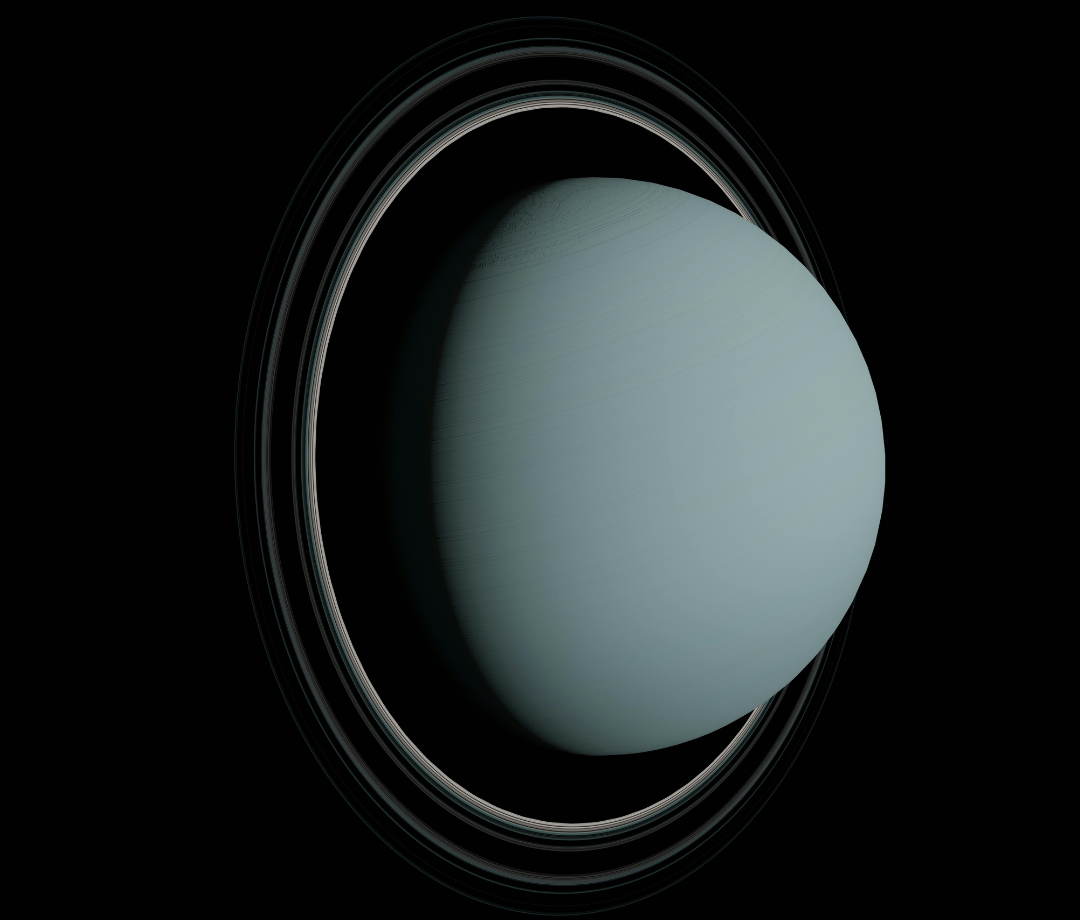
Uranus is the seventh planet from the sun, the only planet named after a Greek god instead of a Roman one, and is the first planet discovered with a telescope. Mercury, Venus, Mars, Jupiter and Saturn can be seen with the naked eye, and Earth can be seen by looking slightly down. Uranus and Neptune are far enough away, however, that you need a telescope to see them in all but the most clear conditions. There was even some debate as to whether Uranus was even a planet when William Herschel discovered it in 1781.
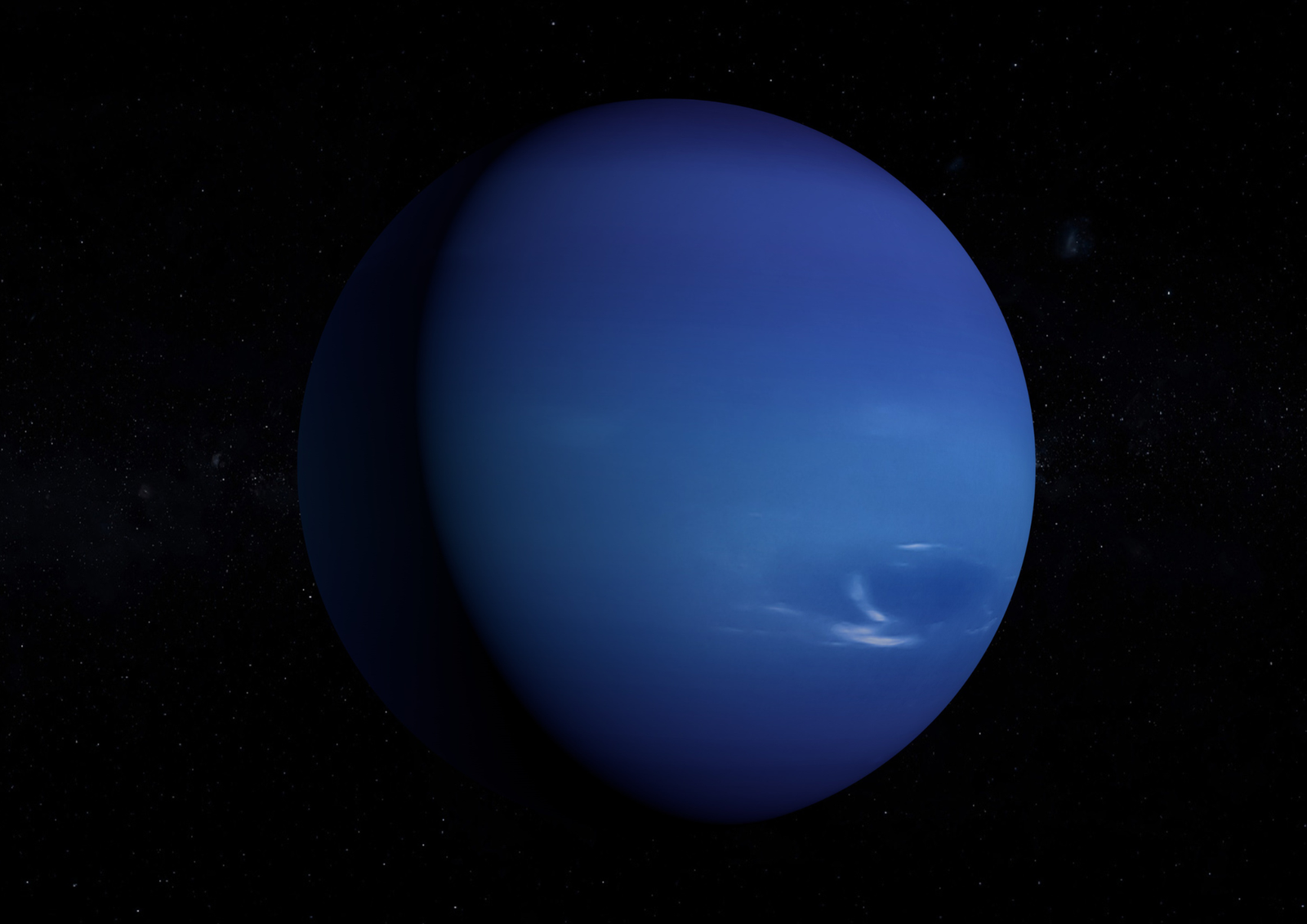
Uranus is known for its light blue colour, and for being tilted almost entirely on its side (being tilted at 82 degrees), and for its similarities with its ‘sister planet’ Neptune. It is the third-largest planet in the solar system after Jupiter and Saturn, and one of the four gas giants, although there is some thought that it and Neptune should be recategorised as ‘ice giants’ due to how cold they are. It has 29 moons, the largest of which is called Titania. The planet has only been visited by one spacecraft, Voyager 2, in 1986.
How Long Are Days And Nights On Uranus?
Uranus takes around 17 hours and 15 minutes to rotate on its own axis. However, due to it being almost sideways, it has 42 years of sun in a row, and 42 years of darkness in a row, as its sideways tilt means that half of its 84 years is straight ‘day’ and the other half is straight night.
What Is The Atmosphere On Uranus Like?
Most of the atmosphere is made up of hydrogen and Helium, with smaller amounts of ice, ammonia and methane.
How Warm Is Uranus?
While scientists are not rushing to put a thermometer in Uranus, we do know that it is very cold. In fact, it has the coldest recorded temperature of any current planet in our solar system, -224 C (-371 F), with an average temperature of -195 C (-320 F).
How Windy Is Uranus?
Uranus is one of the windiest places in the solar system. It has winds of 900 km/h (560 mph). It should be noted that these winds are also retrograde, meaning that they spin in the opposite direction to the planet’s rotation.
How Rainy Is Uranus?
Due to how much gas moves around in Uranus and how quickly it moves, there is rain on Uranus. Although it is hard to determine how much rain there is on Uranus, it does rain diamonds on the planet.
Does Uranus Have Storms?
Uranus does have occasional storms, such as the one that the Hubble Space Telescope recorded in March 1999. Such storms, however, are rarely seen, although it is unknown if this is due to them being rare or simply hard to detect.
Can Uranus Support Life?
Not as we know it. Although there is water, it is frozen due to the planet’s cold. Said cold, as well as the lack of oxygen, make life as we know it impossible. Extremophiles might exist somewhere, but anything remotely familiar to us would not exist.
Can Uranus Be Terraformed?
Terraforming Uranus, if possible, would be extremely difficult. Its size, distance from the sun giving it its cold temperature, lack of a real ‘surface’ due to its gaseous nature, and high winds make it highly unlikely that Uranus will ever be terraformed.