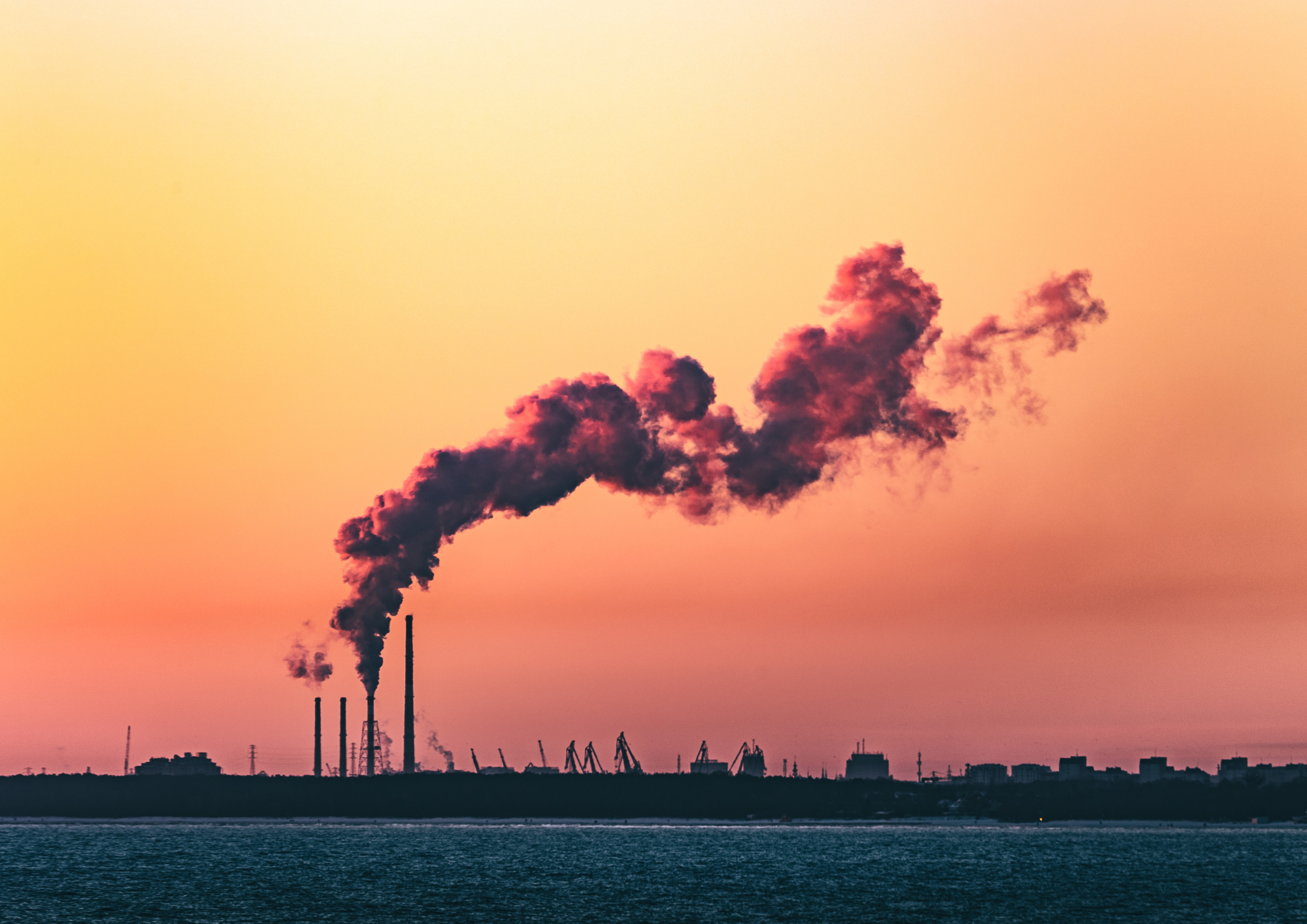
What Is The Air Quality Health Index?
The air quality health index is the way Canadians measure health risks set by the air outside. It uses a scale from 1 – 10+ to measure risk, with higher numbers indicating higher risks. The chart also gives guidelines for how at risk each level puts both the general population and those who are more vulnerable, and the actions that can be taken. It is meant to be a simple way for the general population to quickly understand if the air outside poses a threat to their health, and what to do to reduce any risks they have.
How Is Air Quality Health Index Measured?
The air quality health index is measured by calculating the relationship between three different particles. Those are Nitrogen Dioxide (NO2), ground-level Ozone (O3), and Particulate Matter (PM2.5). Each of these three’s impact is calculated separately. In each instance, the chemical is measured in micrograms per cubic metre of the particle.
To discover the impact of Nitrogen Dioxide, take the following measurement:
(1010.4)×100×[(e(0.000871∗NO2)−1)
For Ozone, use the following:
(e(0.000537∗O3)−1)
And for Particulate Matter:
(e(0.000487∗PM2.5)−1)]
Once you have found the value represented by each particle, the three numbers are added together and rounded to the nearest whole number. This gives the Air Quality Health Index Number.
What Are The Values On The Air Quality Health Index?
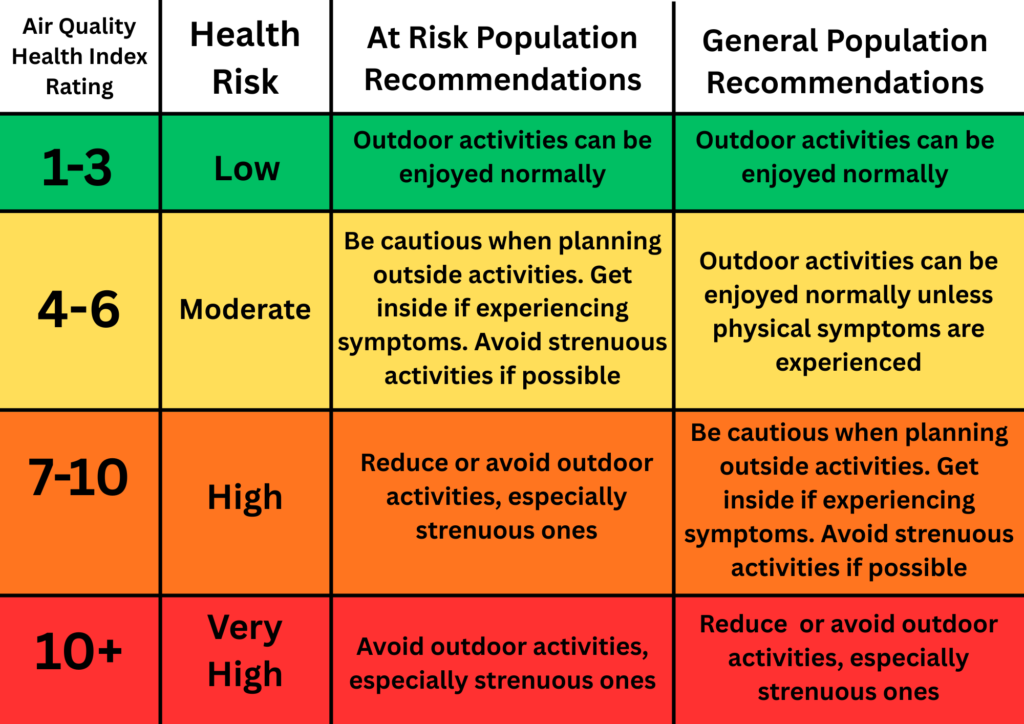
The values on the Air Quality Health Index range from 1 to 10+, with lower numbers indicating lower risk.
Numbers from 1-3 indicate the lowest risk, meaning that it is going to be safe to be outside, regardless of how vulnerable you are.
Numbers 4-6 indicate a moderate risk. Those who are considered vulnerable or at risk (children, elderly, those with pre-existing medical conditions, and pregnant women) should be cautious. Still, those outside of said groups are likely to be fine.
Numbers 7-10 indicate high risk. Everyone should be cautious, especially those at high risk.
Any number above 10 indicates very high risk, and outside activity should be avoided if possible, especially for those most at risk.
What Can Cause High Risk On The Air Quality Health Index?
Several things can impact air quality. These include the following:
Anything that causes pollution, such as smoke from car and factory emissions. Smog is a common cause of health alerts.
Smoke from wildfires.
Excessive amounts of pollen and other plant stuff that gets into the air.
Ground-level ozone.
Please note that these are not all the sources of poor-quality air. There are others.