What Is La Niña?
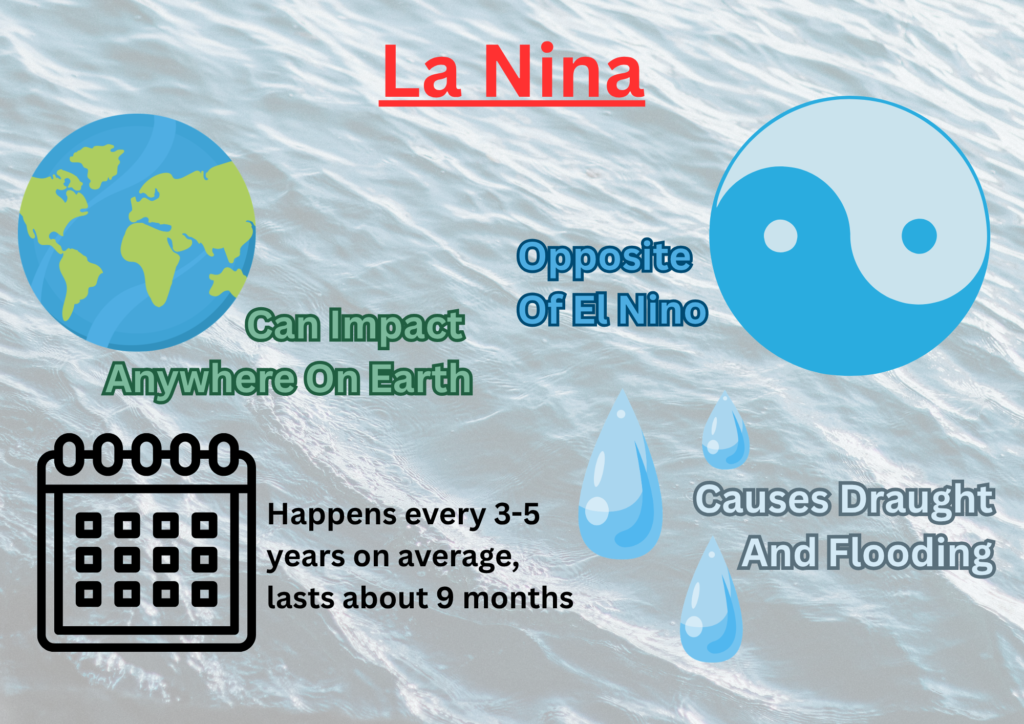
Similar to El Niño, La Niña is a weather system that forms from unusual trade winds that can impact the entire world.
How Does La Niña Form?
In many ways, La Niña is the opposite of El Niño. Both of them form when trade winds in the Pacific are disrupted. However, instead of being caused by weaker trade winds leading to the East Pacific waters being warmer than usual, La Niña has stronger trade winds over the Pacific, meaning that the warmer waters blow further west, leading to East Pacific water being cooler than usual. Like its opposite, this also causes a domino effect that impacts the entire world, but in different ways.
How Can La Niña Impact Weather?
La Niña greatly impacts the amount of precipitation that many places in the world receive, leading to droughts and floods in unusual locations, similar to El Niño. However, these effects are often reversed compared to its close cousin. Areas of the world where El Niño causes flooding, such as Mexico, the southern USA, the southern parts of South America, East Africa, and parts of Europe and Asia, La Niña will cause droughts. The opposite is also true, as places like the Great Lakes, Central America, as well as most of Africa and Oceania, where El Niño can cause droughts, can be flooded due to La Niña.
How Common Is La Niña?
While the time between La Niña events often varies, it averages once every 3-5 years, similar to El Niño, with the impact lasting about 9 months.
What Parts Of The World Does La Niña Impact?
La Niña can impact almost anywhere in the world, but coastal areas are the most vulnerable to it.
What Can La Niña Impact In Canada?
Although any part of Canada can be impacted by La Niña, the area around the Great Lakes is most vulnerable, usually impacted by flooding in La Niña years.
What Is The History Of La Niña Science?
La Niña was a coin termed, meaning “the girl”, and the first official La Niña event occurred in 1903. The phenomenon occurred before then at normal intervals, but the terminology to identify it did not exist.