What Is A Rainbow?
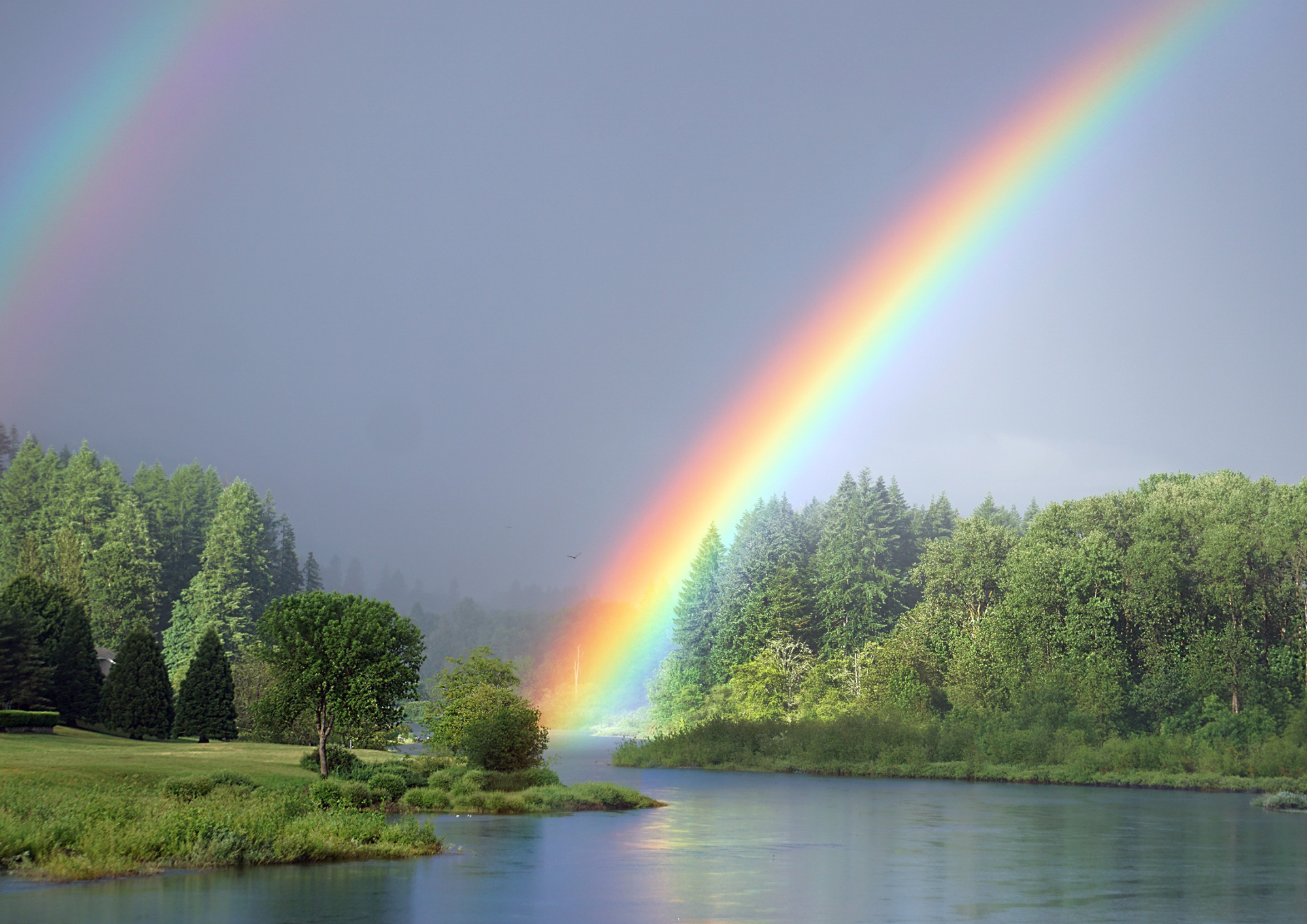
A rainbow is a natural, colourful visual phenomenon caused by light passing through airborne water droplets. Since they are beautiful to look at, can be seen in any part of the world, and are involved in many stories. Unlike what folklore says, you can not find a pot of gold at the end of a rainbow. However, they do have an interesting history behind them, and there is plenty that one can learn about how they form.
What Colours Are In A Rainbow?
This is a more complicated answer than you might think. It is commonly said that the seven colours of the rainbow are red, orange, yellow, green, blue, indigo, and violet, often remembered by the acronym ROYGBIV. However, things are more complicated than that.
When originally studying rainbows, Sir Isaac Newton stated that there were only 5 colours: red, yellow, green, blue and violet. He then however let the gravity of common beliefs at the time get to him, and changed it to seven colours (red, orange, yellow, green, blue, indigo, violet), to go with the seven musical notes (doe, ray, me, far, so, la, tea), the seven days of the week, and seven objects of the solar system that can be seen from Earth with the naked eye at the time (Mercury, Venus, Mars, Jupiter, Saturn, the sun and the moon. However, since colours are seen differently today, what Newton called ”blue” would now be called “cyan”, and what was called “indigo” would now be seen as “blue”. That leads to the modern colours seen as red, orange, yellow, green, cyan, blue and violet.
However, it should be noted that each rainbow is seen differently by each person since they are not solid colours, so each person will see something different each time, meaning that everything ever seen will just be an estimate.
How Does A Rainbow Form?
A rainbow requires light to shine through water droplets. When light does so, it refracts, showing each colour along wavelengths, with red having the longest wavelength, and violet having the shortest. If there is a bright enough light passing through water, water vapour or mist, there is the possibility of seeing a rainbow. The source of light (usually the sun) also can’t be too high up (42 degrees is often cited as the amount it can’t be over).
What Is A Double Rainbow, And How Does It Form?
A double rainbow is when a second rainbow appears above the first, usually with the colours reversed. Most rainbows are usually double rainbows, but the second one (the reversed one) is usually fainter because since its larger and it’s spread over a larger area of the sky.
When Do Rainbows Usually Form?
The most common time to see a rainbow is after a rainstorm, when the clouds start to disperse, and the sun begins to shine through. There are, however, many other times that it’s possible to see a rainbow in addition to these times. They include the following:
- You can see one if there are few clouds, but a lot of fog, due to sunlight passing through the fog.
- You can sometimes see them near the base of waterfalls, with light passing through the fog there. You can also sometimes see them in sprinklers for this reason.
- Sometimes, they can occur at night after a rainstorm. This is called a moonbow.
How Long Is A Rainbow Usually Visible For?
A rainbow usually lasts about 10-20 minutes, but there is a large variance. The world record for longest known rainbow lasted 8 hours, 58 minutes, in Taipei, Taiwan.