What Is Groundhog Day?
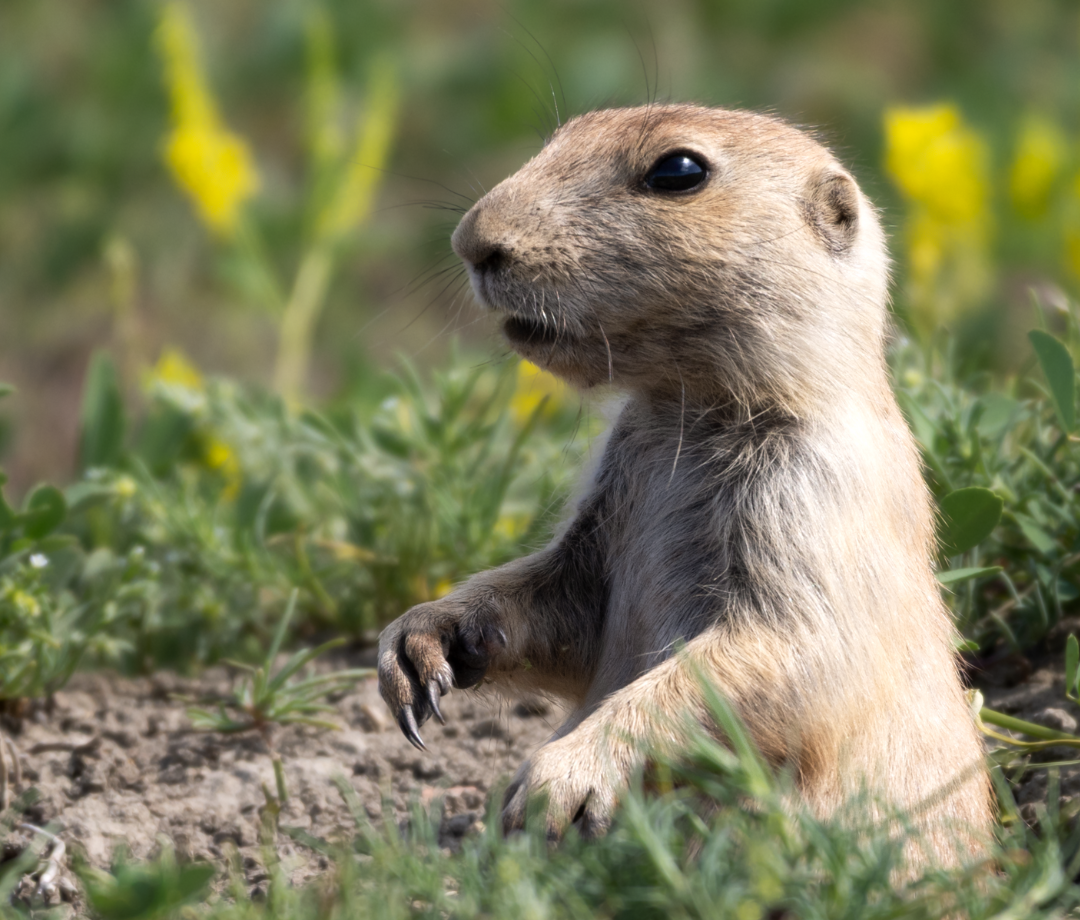
Groundhog Day is an unofficial holiday celebrated in Canada and the United States. According to tradition, a groundhog comes out of its home early in the morning, and if it sees its shadow, there will be six more weeks of winter. Otherwise, there will be an early spring.
The most famous Canadian groundhog is named “Wiarton Willie” and is from Wiarton, Ontario. There have been numerous real groundhogs taking the role of Willie, as groundhogs tend to live from between a few years to a bit over 10. There have been a few years that have had no predictions due to the previous groundhog’s passing away and the inability to find a replacement in time.
Groundhog Day, featuring the most well-known American groundhog, Punxsutawney Phil is a popular movie starring Bill Murray, where Murray’s character repeats the same day over and over, which happens to be Groundhog Day.
When Is Groundhog Day?
Groundhog Day occurs annually on February 2nd.
What Is The History Of Groundhog Day?
Groundhog Day has an interesting background. The idea of having a grounded animal seeing its shadow has its origins in “Badger Day”. This was a day celebrated by German speaking immigrants in Pennsylvania and Ontario in the 17th-19th centuries. Practitioners of the holiday believed that if a badger emerged from its den and saw its shadow, there would be four additional weeks of winter. Over time, the animal was changed to a groundhog, with two additional weeks added to the amount of time that a shadow would add to winter.
According to European tradition, during the holiday of Candlemas:
If Candlemas be fair and bright,
Come, Winter, have another flight;
If Candlemas brings clouds and rain,
Go Winter, and come not again.
This is likely the tradition that Badger Day was based on.
What Are Previous Predictions?
Different sources display different predictions, but for this, we have used it from the official Groundhog Day website. For the sake of brevity, we are only going back to the year 2000.
| Year | Prediction |
| 2026 | Early Spring |
| 2025 | Early Spring |
| 2024 | Early Spring |
| 2023 | Early Spring |
| 2022 | Early Spring |
| 2021 | Early Spring |
| 2020 | 6 More Weeks Of Winter |
| 2019 | Early Spring |
| 2018 | 6 Weeks Of Winter |
| 2017 | 6 Weeks Of Winter |
| 2016 | 6 Weeks Of Winter |
| 2015 | Early Spring |
| 2014 | 6 More Weeks Of Winter |
| 2013 | Early Spring |
| 2012 | Early Spring |
| 2011 | Early Spring |
| 2010 | 6 More Weeks Of Winter |
| 2009 | 6 Weeks Of Winter |
| 2008 | Early Spring |
| 2007 | Early Spring |
| 2006 | Early Spring |
| 2005 | Early Spring |
| 2004 | 6 More Weeks Of Winter |
| 2003 | Early Spring |
| 2002 | Early Spring |
| 2001 | Early Spring |
| 2000 | 6 More Weeks Of Winter |
How Accurate Were These Predictions?
It is very difficult to determine whether or not there will be an ‘early spring’. It is due to the fact that there can be a large amount of variance in what happens in a given area, and during a specific time, and the lack of a definition of what counts as “early spring” vs “six more weeks of winter”. For this, we will use the following guidelines:
Using weather recorded at Wiarton airport, as that is within the city, Wiarton Willy makes his predictions.
“Early Spring” will refer to times when the end of February will have temperatures averaging above freezing.
We will use information on this page.
| Year | Prediction | What Happened? | Accuracy |
| 2026 | Early Spring | To be seen | Unknown |
| 2025 | Early Spring | 6 More Weeks Of Winter | Incorrect |
| 2024 | Early Spring | 6 More Weeks Of Winter | Incorrect |
| 2023 | Early Spring | 6 More Weeks Of Winter | Incorrect |
| 2022 | Early Spring | 6 More Weeks Of Winter | Incorrect |
| 2021 | Early Spring | Early Spring | Correct |
| 2020 | 6 More Weeks Of Winter | Early Spring | Incorrect |
| 2019 | Early Spring | Early Spring | Correct |
| 2018 | 6 Weeks Of Winter | Early Spring | Incorrect |
| 2017 | 6 Weeks Of Winter | Early Spring | Incorrect |
| 2016 | 6 Weeks Of Winter | Early Spring | Incorrect |
| 2015 | Early Spring | Early Spring | Correct |
| 2014 | 6 More Weeks Of Winter | Early Spring | Incorrect |
| 2013 | Early Spring | Early Spring | Correct |
| 2012 | Early Spring | Early Spring | Correct |
| 2011 | Early Spring | Early Spring | Correct |
| 2010 | 6 More Weeks Of Winter | Early Spring | Incorrect |
| 2009 | 6 Weeks Of Winter | Early Spring | Incorrect |
| 2008 | Early Spring | Early Spring | Correct |
| 2007 | Early Spring | Early Spring | Correct |
| 2006 | Early Spring | Early Spring | Correct |
| 2005 | Early Spring | Early Spring | Correct |
| 2004 | 6 More Weeks Of Winter | Early Spring | Incorrect |
| 2003 | Early Spring | Early Spring | Correct |
| 2002 | Early Spring | Early Spring | Correct |
| 2001 | Early Spring | Early Spring | Correct |
| 2000 | 6 More Weeks Of Winter | Early Spring | Incorrect |
This gives us the following statistics:
| Early Spring Predictions | 18 |
| 6 Weeks Of Winter Predictions | 9 |
| Early Springs: | 22 |
| 6 Weeks Of Winters: | 4 |
| Correct predictions | 13/26 (50 %) |
A few notes to be had here:
There is no year where the average temperature at the end of February was below -5 C (23 F) or above 5 C (41 F), keeping things relatively consistent.
The vast majority of late February high averages were only 1-2 C away from freezing.