Why Was Ted Fujita And What Is He Known For?
Tedsuya Theodore Fujita (Or Ted Fujita for short) is a Japanese-American meteorologist who is known for his work studying tornadoes. His work in the study of tornadoes was so instrumental that he got the nickname “Mr. Tornado”. He is most well known for creating the Fujita scale, which was the first and most well-known scale used in measuring the power of a tornado, using wind speed. It categorizes tornadoes in power, with F0 being the most common and least damaging, to F5, which is the strongest and extremely rare. An average of about 1 F5 tornado will occur per year, although specific years can vary greatly, and only 8 F5 tornadoes have ever been recorded outside the United States, with the 2007 Elie tornado being the only one to ever happen in Canada. Fujita did theorize the idea of an F6 tornado, calling the idea ‘inconceivable’. He originally graded 2 tornadoes at F6, but downgraded both to F5.
Fujita created the scale in 1971 and used a tornado’s wind speed as its ranking factor. Although the scale has been phased out, starting in 2007, with Canada officially replacing it with the Enhanced Fujita Scale in 2013, the original Fujita Scale is still seen as a benchmark in tornado measurement, and Fujita’s research is still used and well-respected. The scale was the one used to measure tornado strength in the movie Twister.
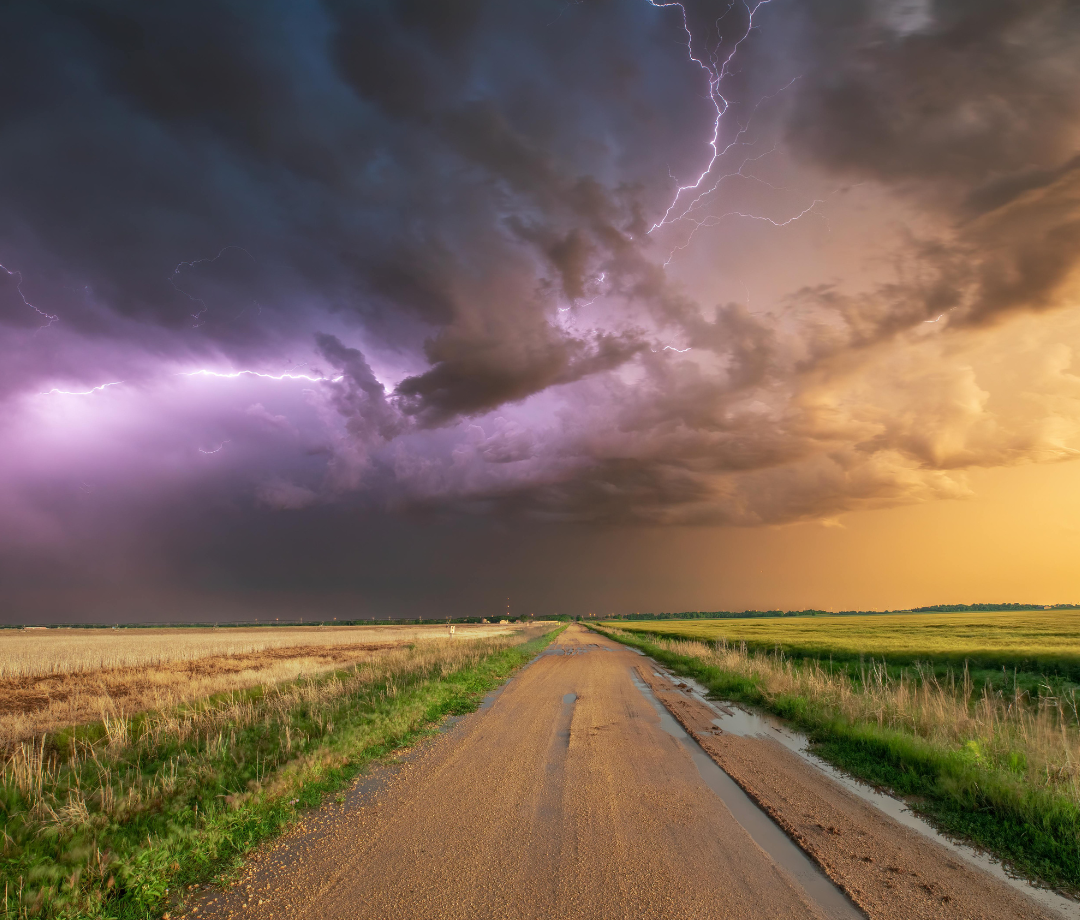
Fujita’s work on tornadoes went beyond the creation of a scale. He was the one who discovered the idea of a “tornado family”, which is a group of twisters touching down within a single intense thunderstorm. Before his work, it was thought that tornadoes would ‘jump’, creating multiple paths in a seemingly random order.
His work goes beyond that of studying tornadoes, as he also discovered the concept of “downbursts”, noting that four of the 148 “tornadoes” in the April 1974 outbreak were actually downbursts, which is a strong wind that blows downward from the cloud to the ground for several minutes, which can look like a tornado from a distance.
Where Was Ted Fujita Born And Raised? Where Else Did He Live?
Fujita was born on October 23rd, 1920, in Fukuoka Prefecture, Japan, which is located on the island of Kyushu. During World War II, he was located in Kokura. It should be noted that this was the original target for the bomb known as “Fat Man”, but due to large amounts of clouds, the bomb was instead dropped on Nagasaki. In 1953, after graduating from Tokyo University, he moved to the United States, using Visas to legally work at the University of Chicago. He no longer needed a Visa when he became a United States Citizen in 1968, and he continued to work at the University of Chicago until his death on November 19, 1998, at the age of 78.
What Was Ted Fujita’s Career Like?
In addition to creating the Fujita Scale and his work on downbursts, Ted has a few other breakthroughs in meteorology. When he analyzed the 1965 Palm Sunday outbreak, he discovered the concept of a multiple vortex tornado, which was a large twister with several smaller ones inside of it. He also created terminology for Wall Clouds, Tail Clouds, Micro Bursts, and Wind Shear. He also studied hurricanes later in his career and contributed a lot to studying Hurricane Andrew in 1992, which was, at the time, the most damaging hurricane of all time when it hit Florida.
What Is Known About Ted Fujita’s Personal Life?
Ted Fijita was married to a woman named Sumiko Yamamoto, who helped him create the Fujita scale, and often did work with him on a professional level, often working together on surveying aerial damage. They had a child together named Kazuya.
Ted lived until the age of 78, passing away from complications due to diabetes. He is remembered today for his great contributions to the world of meteorology, especially mesoscale meteorology, which includes tornadoes and storms such as thunderstorms that often create them.